Top 9 Google Vertex AI Alternatives (2026)
Written by
Anton Malling
•
Updated
Short answer
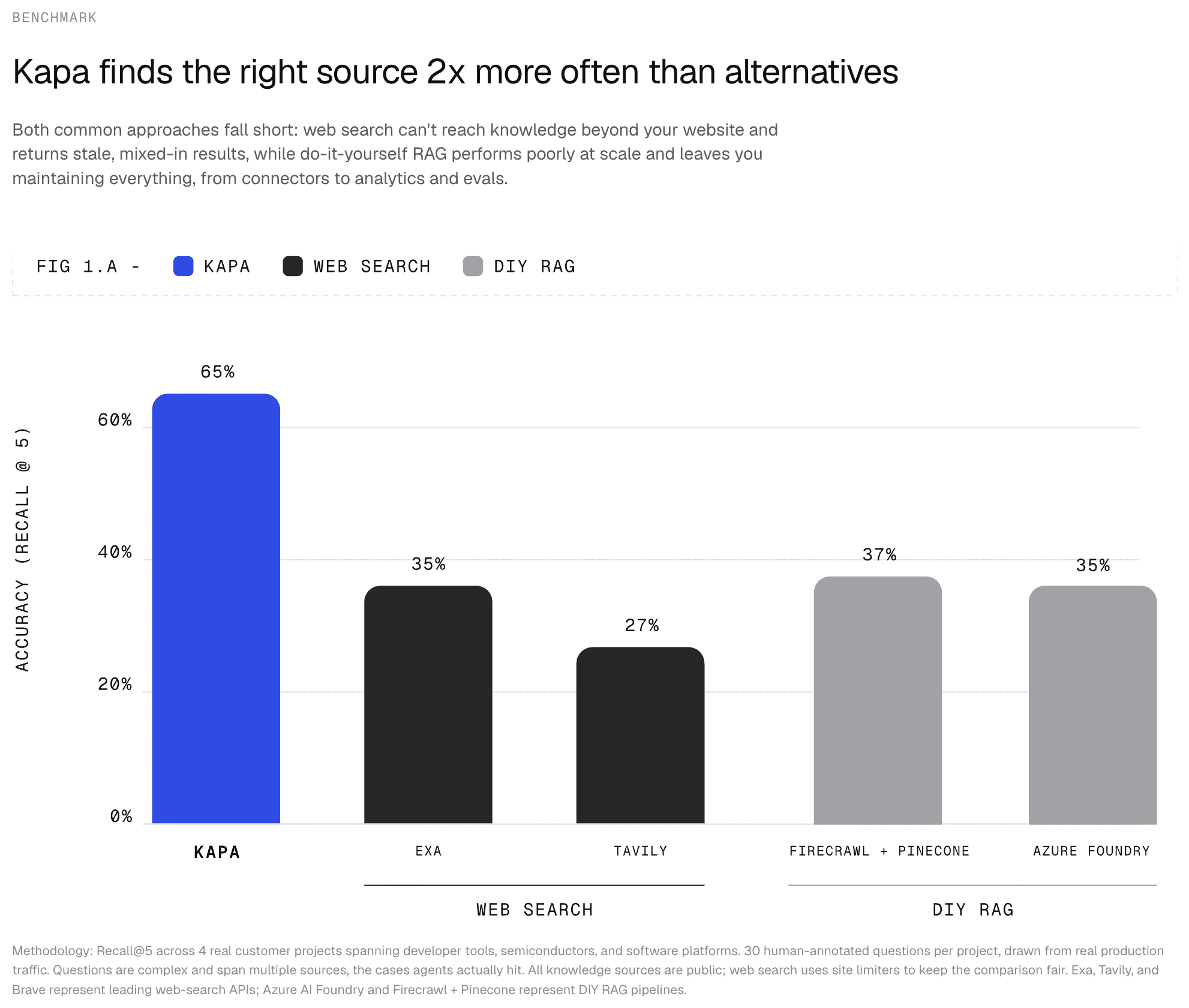
Google Vertex AI is a capable machine-learning platform, and for retrieval it offers building blocks like Vertex AI Search and the RAG Engine. But teams often want an alternative: something less tied to Google Cloud, or a managed retrieval layer they do not have to assemble and maintain. The alternatives split into three groups: managed RAG and retrieval APIs, other cloud-native RAG services, and infrastructure or frameworks you build yourself. For grounding agents and products in your own technical knowledge, kapa.ai is the strongest alternative, a purpose-built Retrieval API that returns ranked, cited results in one call and finds the right source about twice as often as do-it-yourself RAG pipelines in its benchmark.
This guide covers nine Google Vertex AI alternatives in 2026, grouped by the job each does, with where each fits.
Key takeaways
Vertex AI alternatives fall into three groups: managed RAG and retrieval APIs, other cloud RAG services, and DIY infrastructure and frameworks.
For grounding agents in your own product knowledge, a managed retrieval API is the fastest and most accurate route, and kapa.ai leads that group for technical content.
Cloud-native options like Amazon Bedrock Knowledge Bases and Azure AI Search fit teams committed to AWS or Microsoft, just as Vertex fits Google Cloud teams.
DIY stacks (Pinecone, Weaviate, LlamaIndex, LangChain, Elastic) give full control but leave you owning connectors, tuning, evaluation, and freshness.
Choose by how much you want to build: a retrieval API if retrieval supports your product, a DIY stack if retrieval is your product.
Why teams look for a Vertex AI alternative
The most common reasons are cloud lock-in and the cost of ownership. Vertex is at its best inside Google Cloud, so teams not committed to GCP look elsewhere, and even on GCP the RAG pieces are building blocks you assemble: connectors, chunking, retrieval tuning, evaluation, freshness, and analytics all become your responsibility. That is a real engineering commitment for something that, for most companies, supports the product rather than being the product.
Accuracy at scale is the other driver. An agent's most-used tool is knowledge search, called about as often as all its other tools combined, so retrieval quality caps the whole agent. In kapa's recall@5 benchmark on complex, multi-source production questions, a purpose-built retrieval engine found the right source about twice as often as do-it-yourself RAG pipelines (Azure AI Foundry and Firecrawl plus Pinecone) and leading web-search APIs (Exa, Tavily, Brave). Vertex's RAG Engine sits in the same do-it-yourself category, so the question is whether to assemble a general pipeline or call a tuned one.
Quick-reference comparison
Alternative | Group | Best for |
|---|---|---|
kapa.ai | Managed retrieval API | Grounding agents in technical product knowledge |
Managed RAG API | Fast, full-pipeline RAG as a service | |
Managed retrieval API | Embeddings and reranking building blocks | |
Cloud-native RAG | AWS-committed teams | |
Cloud-native RAG | Microsoft-committed teams | |
DIY vector database | Open-source vector search | |
DIY vector database | Custom RAG on a managed vector store | |
LlamaIndex / LangChain | DIY framework | Building your own RAG pipeline |
DIY search engine | Search-based retrieval at scale |
Managed RAG and retrieval APIs
These give you retrieval as a service: connect sources, call an endpoint, get results, with the pipeline handled for you. They are the fastest route and the best fit when retrieval supports your product rather than being it.
1. kapa.ai: best for grounding agents in technical product knowledge
kapa.ai is a purpose-built Retrieval API and hosted MCP server that gives agents grounded knowledge of your product in a single call. It indexes your docs, code, API specs, tickets, and chat through 50+ connectors and keeps the index live, then returns a handful of ranked, cited chunks in about two seconds rather than a wall of text. You deploy it two ways:
Retrieval API:
Hosted MCP server:
The MCP server works with tools like Claude Code and Cursor and frameworks like LangGraph, and coverage-gap analytics turn the questions your agent could not answer into a ranked backlog of docs to write. In kapa's benchmark it finds the right source about twice as often as DIY RAG pipelines, and it is SOC 2 Type II certified and GDPR compliant, with SSO, RBAC, zero data retention, and PII masking.
Best for: grounding agents, copilots, and support in technical product knowledge. Trade-off: specialized for technical product and documentation knowledge rather than general enterprise data. It powers agents at CircleCI, Port, Airbyte, and Matillion.
kapa.ai holds a 4.9/5 rating across 41 reviews on G2, where reviewers call out exactly this build-versus-buy trade-off. As Richard B., a Senior Developer Relations Engineer at Harness, put it: "maintaining a retrieval pipeline well is close to a full-time job, and kapa dropped onto our existing docs as a script with no platform migration." You can get an API key and test it on your own content.
2. Vectara: best for general managed RAG as a service
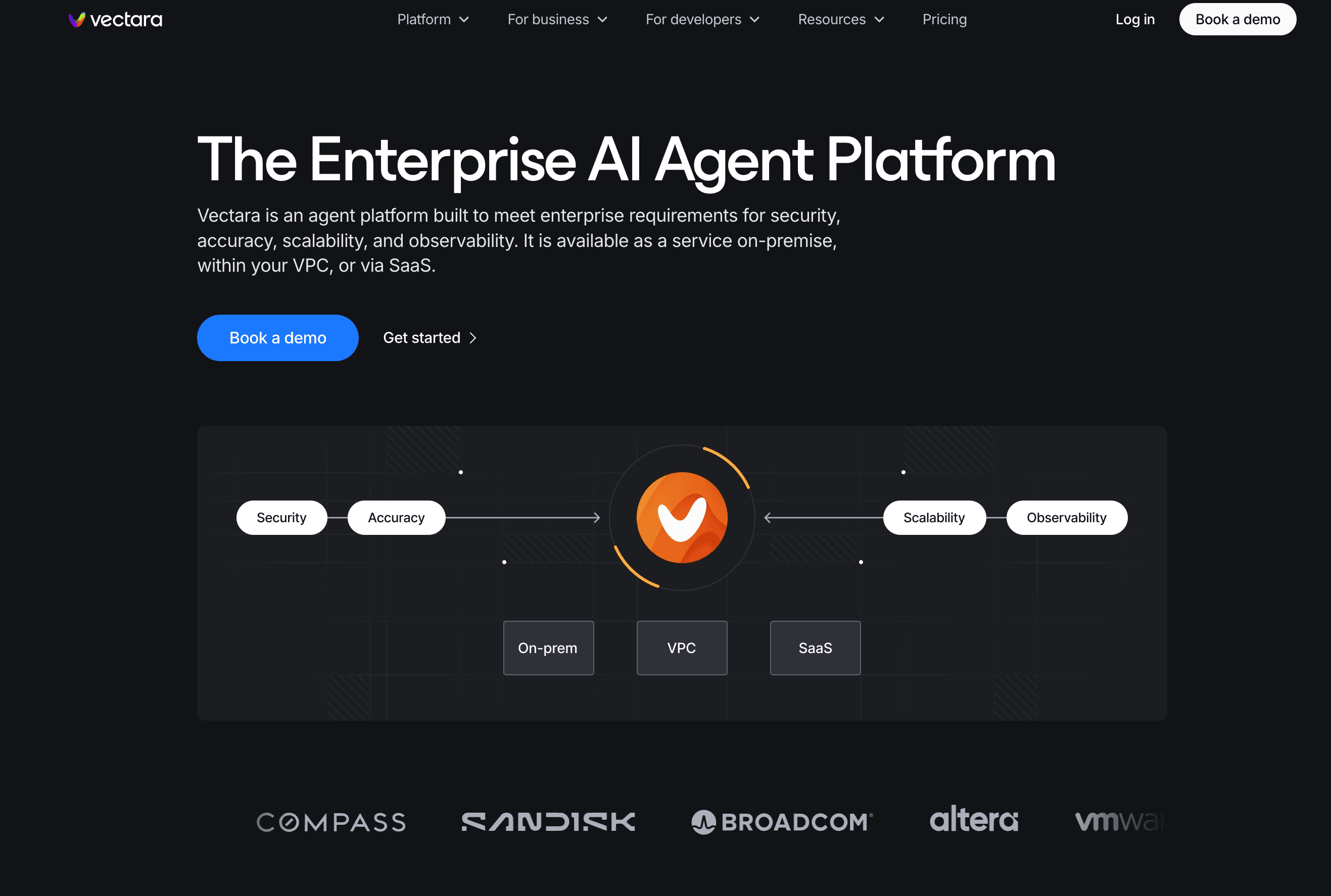
Vectara is a general-purpose managed RAG platform that provides a retrieval-and-generation pipeline through an API. It removes infrastructure work, but it is domain-agnostic rather than tuned for technical product knowledge, so accuracy on complex, code-heavy questions depends on how you configure and curate your content, and you give up control over the pipeline in exchange for the convenience.
Best for: teams wanting a general, domain-agnostic managed RAG API.
3. Cohere: best for embeddings and reranking building blocks
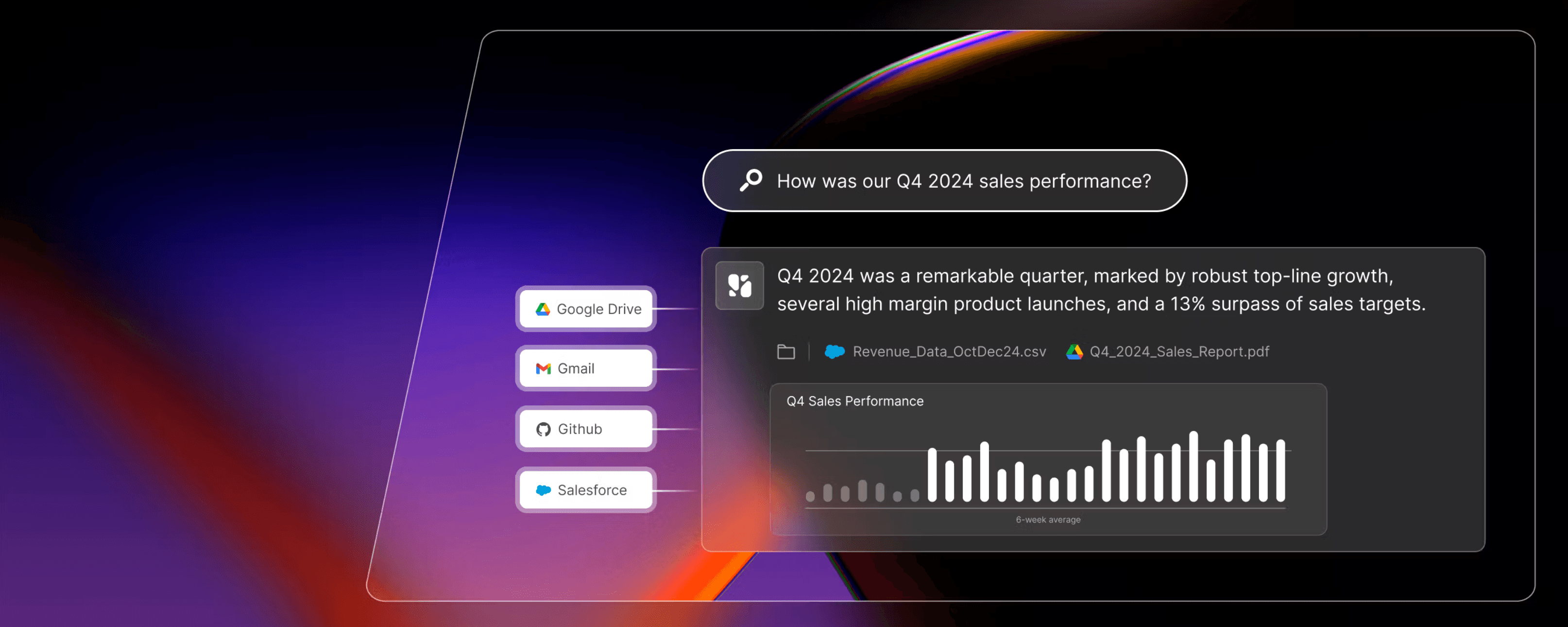
Cohere offers embedding and Rerank APIs, plus its North enterprise assistant, that teams use as components when building retrieval. These are pieces rather than a managed retrieval layer, so you still assemble the connectors, storage, orchestration, evaluation, and freshness around them yourself, which is closer to the DIY end than to a turnkey alternative.
Best for: teams building their own pipeline that want embedding and reranking components.
Cloud-native RAG services
If you are committed to a specific cloud, its native RAG service is the path of least resistance, at the cost of being tied to that ecosystem, which is the same trade-off Vertex represents for Google Cloud.
4. Amazon Bedrock Knowledge Bases: best for AWS-committed teams
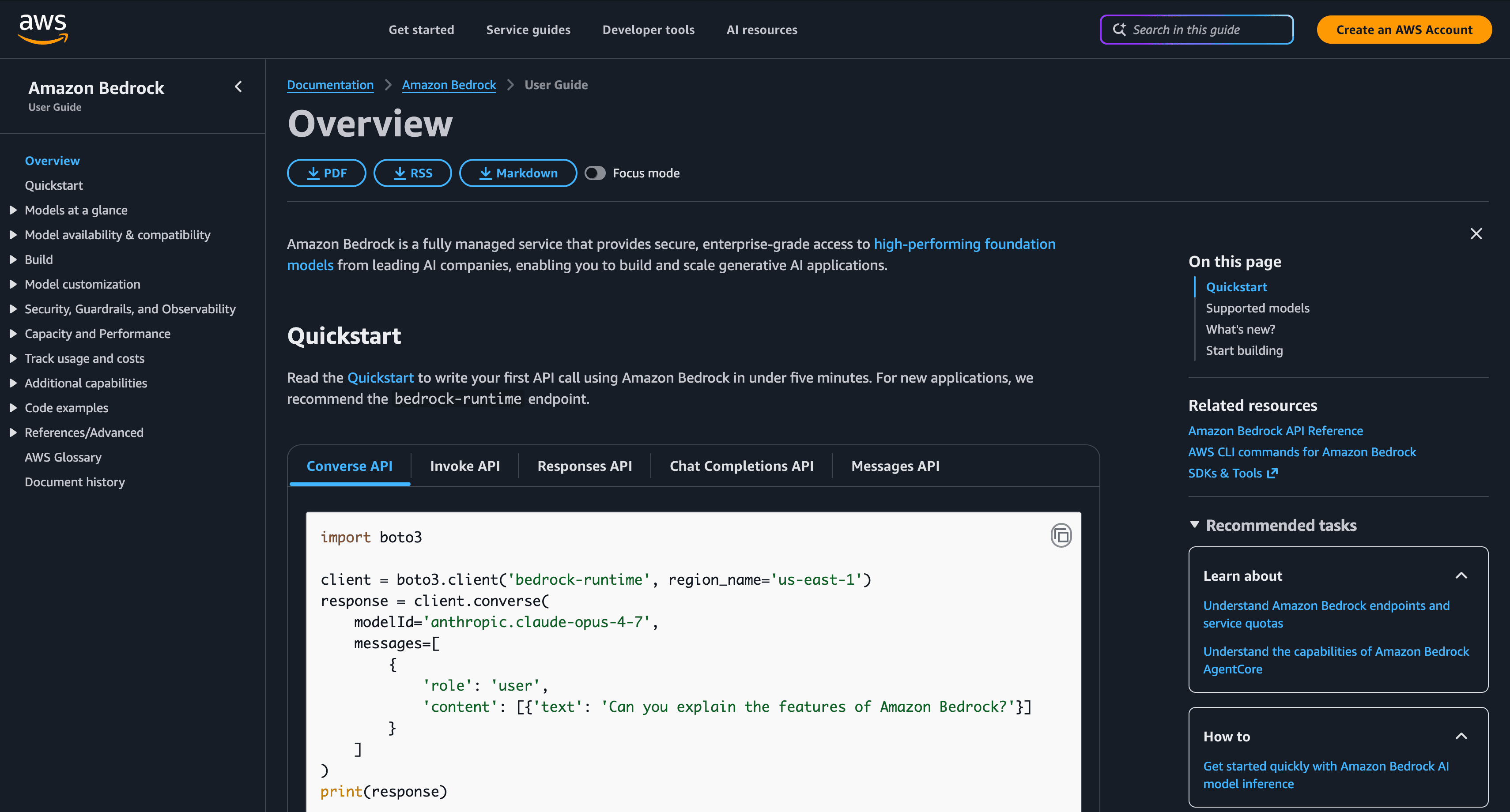
Bedrock Knowledge Bases is AWS's managed RAG: connect an S3 source, choose an embedding model, pick a vector store, and Bedrock handles chunking, embedding, ingestion, and retrieval. It pairs with a broad multi-vendor model catalog through one API.
Best for: teams standardized on AWS with data in S3.
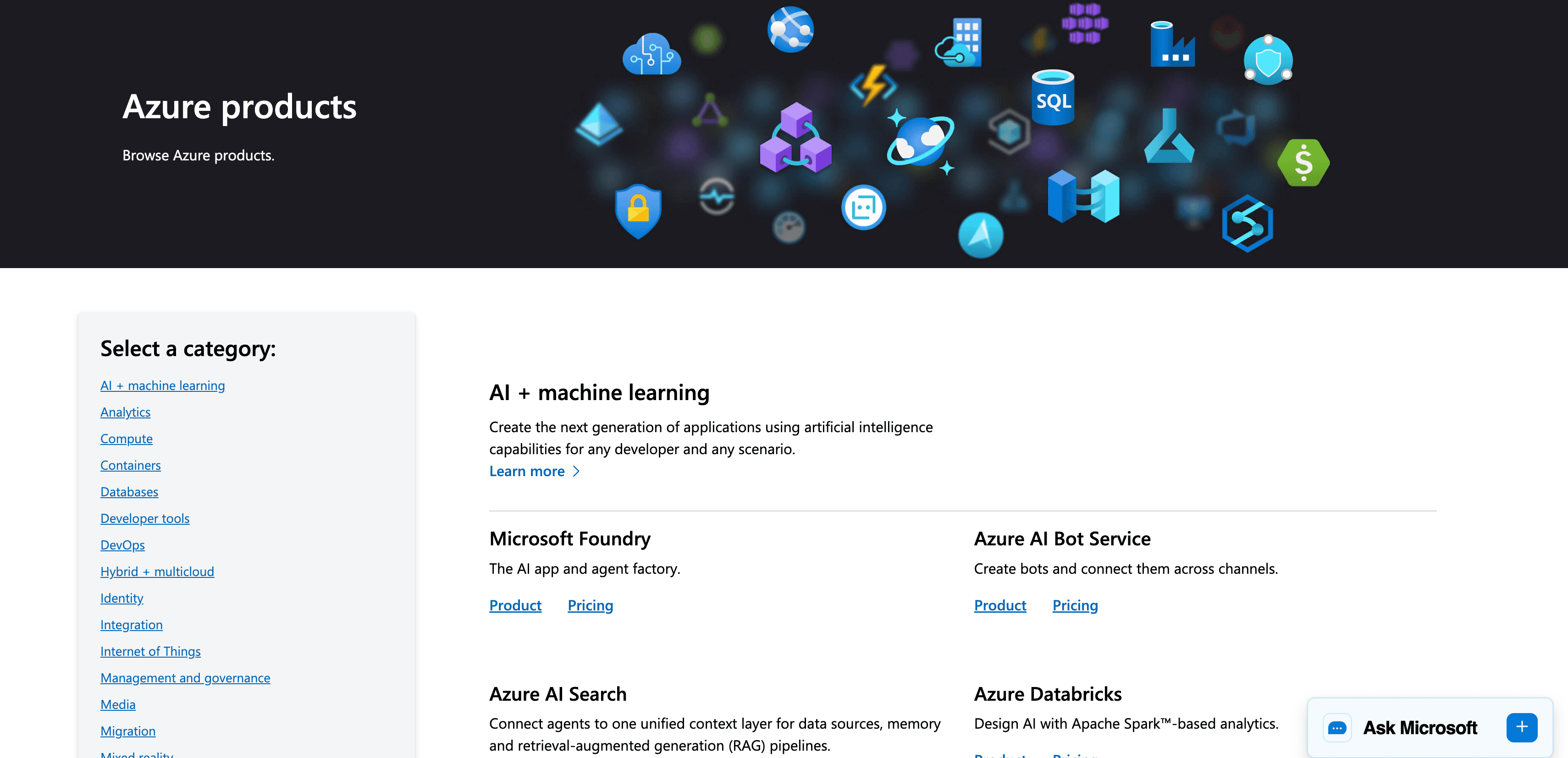
5. Azure AI Search (Azure AI Foundry): best for Microsoft-committed teams
Azure AI Search provides retrieval that integrates with Azure OpenAI and the Azure AI Foundry stack for building RAG on Microsoft's cloud. It is a natural fit for organizations already on Azure.
Best for: teams standardized on Microsoft Azure.
RAG infrastructure and frameworks you build yourself
These give maximum control and are the right call when retrieval is your core product and you have the team to build and maintain it. You own connectors, tuning, evaluation, and freshness.
6. Weaviate: best for open-source vector search
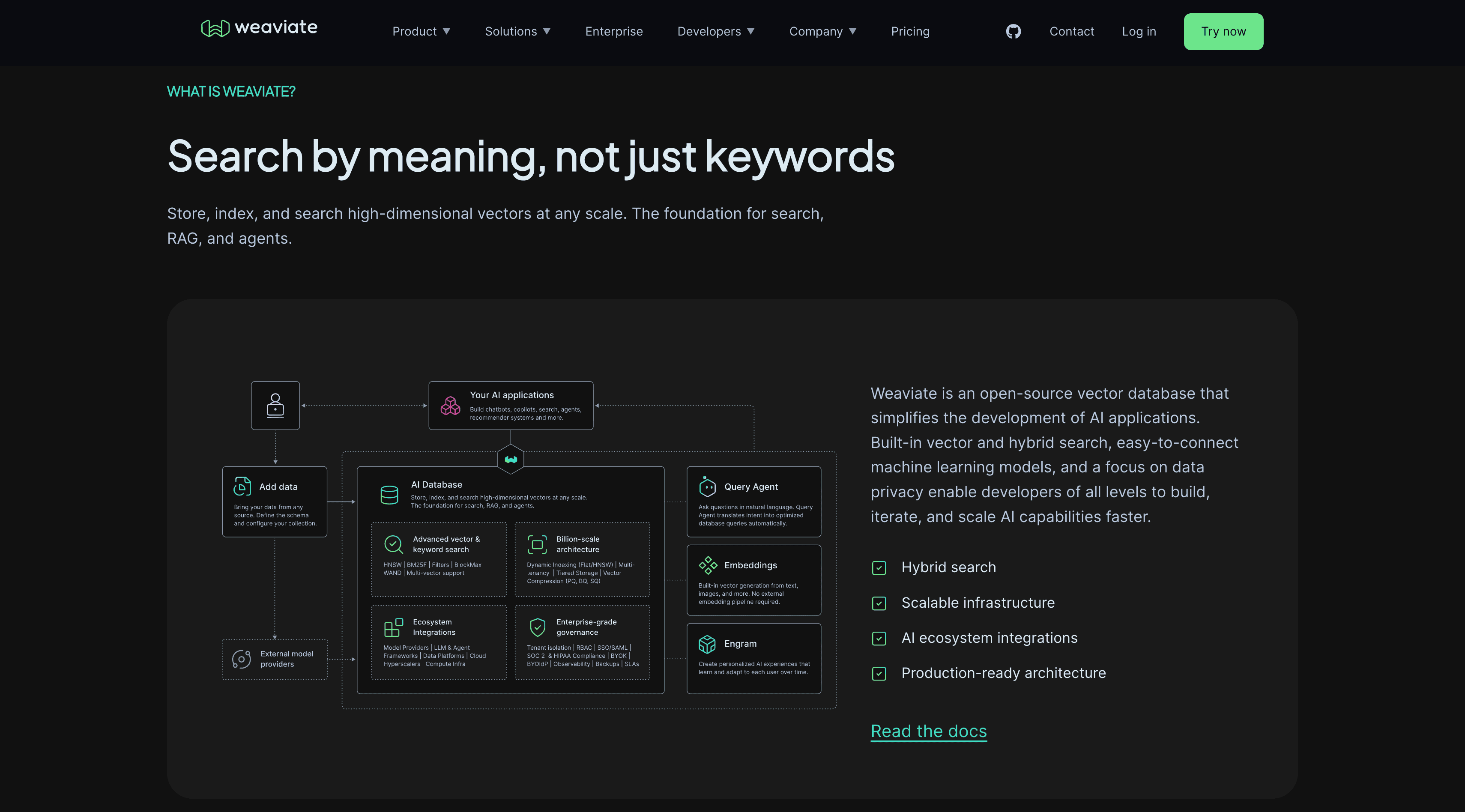
Weaviate is an open-source vector database with managed and self-hosted options, popular for teams that want control over their vector layer. It is one component of a larger build, and its open-source model makes it a favorite where teams want to own and inspect the vector layer.
Best for: teams wanting open-source vector search.
7. Pinecone: best for custom RAG on a managed vector store
Pinecone is a managed vector database for storing embeddings and running similarity search at scale, a common core of a custom RAG stack. You still build the surrounding pipeline.
Best for: teams building custom retrieval who want a managed vector store.
8. LlamaIndex and LangChain: best for building your own pipeline
LlamaIndex and LangChain are open-source frameworks for wiring together data connectors, retrieval, and LLM calls into a custom RAG or agent pipeline. They are flexible and powerful, and they leave production accuracy, evaluation, and maintenance to you.
Best for: engineering teams building bespoke retrieval and agent logic.
9. Elastic: best for search-based retrieval at scale
Elastic (Elasticsearch) provides mature search and vector capabilities used for retrieval at scale, especially where teams already run it. It is a search engine you operate rather than a managed answer layer.
Best for: teams with existing Elastic infrastructure.
How to choose a Vertex AI alternative
Start with how much you want to build. If retrieval supports your product and you want accurate grounding without owning a pipeline, a managed retrieval API like kapa.ai is the fastest route, and for technical product knowledge it is the most accurate. If you are committed to AWS or Azure, the native RAG service keeps you in one ecosystem, but limits you in source connections. If retrieval is genuinely your core product and you have the ML staff, a DIY stack on Pinecone, Weaviate, LlamaIndex, LangChain, or Elastic gives you full control. The pattern mirrors any build-versus-buy decision: the more retrieval is a means rather than the product, the more a managed API wins.
What are the best Google Vertex AI alternatives in 2026?
The best alternatives fall into three groups: managed RAG and retrieval APIs like kapa.ai, Vectara, and Cohere; cloud-native RAG services like Amazon Bedrock Knowledge Bases and Azure AI Search; and DIY infrastructure like Pinecone, Weaviate, LlamaIndex, LangChain, and Elastic. The right one depends on how much of the pipeline you want to own. For grounding agents in technical product knowledge, kapa.ai is the strongest pick because it is a purpose-built retrieval API.
What is the best Vertex AI alternative for grounding agents?
For grounding agents in your own product knowledge, a managed retrieval API is the best alternative because it returns cited results from your content in one call without a pipeline to maintain. It should be accurate, live, and simple to connect. kapa.ai is a purpose-built Retrieval API and MCP server that does this and finds the right source about twice as often as DIY RAG pipelines in its benchmark.
How is a managed retrieval API different from building RAG on Vertex?
Google Vertex AI gives you building blocks to assemble and own a retrieval pipeline on Google Cloud, while a managed retrieval API is a single endpoint your agent calls, with connectors, tuning, freshness, and analytics handled for you. The difference is owning infrastructure versus calling a service. kapa.ai is a managed retrieval API that connects 50+ sources and returns ranked, cited chunks in about two seconds.
Which Vertex AI alternatives work outside Google Cloud?
Most do: managed retrieval APIs like kapa.ai, Vectara, and Cohere are cloud-agnostic, Amazon Bedrock ties to AWS and Azure AI Search to Microsoft, and DIY tools like Pinecone, Weaviate, and Elastic run anywhere. Choosing outside Google Cloud is often exactly why teams look for a Vertex alternative. kapa.ai is cloud-agnostic and connects to your sources wherever they live.
Is a managed RAG platform more accurate than DIY RAG on Vertex?
It can be, because a purpose-built engine is tuned across many real deployments rather than assembled once for a single use case. In kapa's recall@5 benchmark on complex, multi-source questions, it returned the right source about twice as often as do-it-yourself RAG pipelines and web-search APIs. kapa.ai is tuned specifically for technical product knowledge, which is where general-purpose pipelines tend to fall short.
When should I use Google Vertex AI instead of an alternative?
Use Vertex when your team is committed to Google Cloud and wants Gemini access and BigQuery integration, or when retrieval is core to your product and you have the ML staff to build and own the pipeline. If retrieval supports your product rather than being it, a managed retrieval API is usually the better use of engineering time. kapa.ai covers the technical product-knowledge case with a purpose-built retrieval engine you do not have to maintain.
TRUSTED BY 200+ INDUSTRY-LEADING ENTERPRISES WITH COMPLEX PRODUCTS
- Silicon LabsAsk anything...
- LogitechAsk anything...
- n8nAsk anything...
- monday.comAsk anything...


